
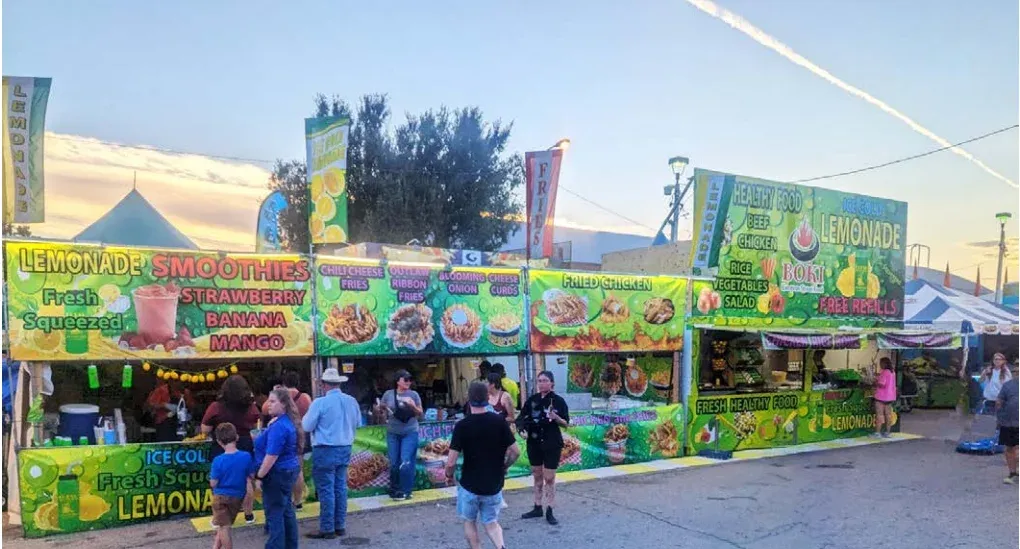
Food is one of the main reasons people come to a fair, and one of the main things they talk about afterward. The food lineup also pays a real share of the bills through space fees and commissions. Picking vendors is one of the biggest decisions a fair board or festival committee makes each year.
We have been on the other side of that decision for nearly 20 years, applying to state fairs, county fairs and festivals across 9 states. This is the checklist we would use if we were choosing the vendors.
1. Start with the gaps in your lineup
The most common mistake is filling the midway with whoever applies first. You end up with four corn dog stands and nothing for the guest who can't eat gluten. Before you open applications, list what you already have and what is missing:
- A full meal. Do evening crowds have something beyond fried snacks, like a steak dinner or a rice plate?
- Dietary options. Gluten-free, vegetarian and vegan guests are a real share of every crowd. A dedicated gluten-free stand is something most fairs still don't have.
- Something new. Every year has a trend food. Korean corn dogs are the current one.
- Sweets and drinks. Lemonade, ice cream and gelato sell all day in summer heat.
Then pitch the gaps to vendors. Good vendors will tell you what they would bring that you don't have. When we apply, we research each fair first and only pitch what is missing.
2. Ask for the paperwork up front
A professional vendor has this ready to send the day you ask. If they don't, that tells you something.
- Certificate of insurance. General liability, usually $1,000,000 per occurrence, with your fair named as additional insured. State fairs and some grounds require $2,000,000, an umbrella or auto liability. Say exactly what you need and the exact name to put on the certificate.
- Food safety. A certified food protection manager (ServSafe or similar) on staff.
- Licenses. The vendor applies for the temporary food license with your county or state health department and registers for sales tax in your state. Ask when they plan to file.
- Menu and prices. So you can check for overlap and for prices that fit your crowd.
- References. From other fairs, ideally ones like yours.
Vendors who want to understand the insurance side can read Concession Business Insurance: Coverage, Costs & COIs.
3. Look at the stand, not just the menu
Ask for photos of the actual unit, set up and open. Then check:
- Footprint. Frontage and depth, and remember that frontage includes the hitch, awnings, steps and open doors.
- Self-contained. Does it carry its own fresh water and gray water tanks? Does it have a handwash sink and a 3-compartment sink?
- Looks. Bright, clean banners and lights sell food and make your midway look good in photos.
- Cooking. Propane, electric, or both? Your fire marshal will want to know.
4. Get the power and water needs early
Utilities are where good plans fall apart on setup day. Ask every vendor for their exact needs before you assign space:
- Electric. Many food stands want 220V/50A (a NEMA 14-50 outlet). Smaller stands may need only 110V/20A. Ask how many connections each stand needs.
- Water. A potable water hookup within hose reach. Vendors should bring food-grade hoses and a backflow preventer, which some states require.
- Wastewater and grease. Where gray water and used grease go.
- Generators. If you don't allow them, say so in the application.
5. Check how they run on a busy day
At a fair, the rush is what matters. Ask how many staff they put in each stand, how they handle peak hours, and what payments they take. Cards and phone payments keep lines moving. If your fair requires its own registers, check the vendor can work with them.
Experienced operators can run several stands at one event. That gives you one contract and one point of contact for several spots on the grounds.
6. Favor vendors who come back
A fair's best vendors are the ones who return every year: they know your grounds, your staff and your crowd. Ask how many years a vendor has worked other events, and call those fairs. Industry involvement is another good sign. Vendors active in groups like NICA and IAFE tend to know how fairs operate. Mobile Food Experts has a rundown of NICA, IAFE and IFEA.
7. Put it all in the contract
Write down the space, the utilities, the hours, the menu, the fees or commission, the insurance wording and the setup and teardown times. Clear contracts make for easy years.
Final thoughts
The best food lineups are built, not filled. Know your gaps, ask for paperwork early, check the stands and the utilities, and give your spots to vendors who will come back.
If your fair or festival is building its next lineup, tell us about it. We will tell you honestly which of our 12 concepts would fill a gap, and which wouldn't. See also how working with us goes.

Nearly 20 years running fair and festival concessions across 9 states. MBA, University of South Dakota. Keynote speaker for NICA and IAFE.