
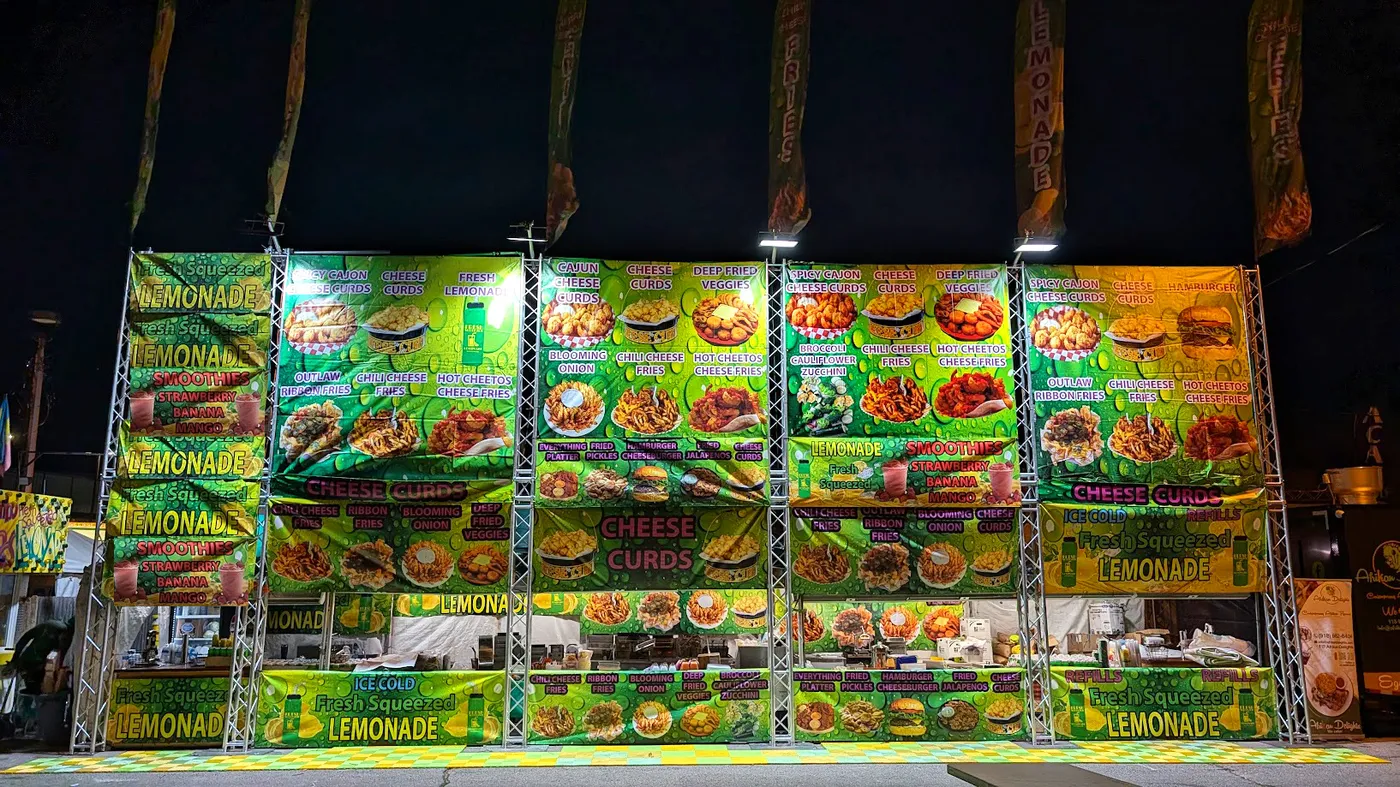
There is no single number, because a 3-day street fair and an 11-day state fair are different animals. But you can get to a good answer with three questions: how many people will want food in your busiest hour, how fast a stand can serve them, and what mix of food they want.
Step 1: Estimate your peak-hour food crowd
Daily attendance is the wrong number to plan from. What matters is the busiest hour, usually lunch, dinner, or the hour after a grandstand show lets out.
- Start with your expected attendance for your busiest day.
- Estimate the share of that day's crowd on the grounds in the peak hour. Your gate counts by hour, if you have them, are the best source.
- Estimate how many of those people buy food in that hour. Families often buy in groups, so count orders, not people.
Use your own gate and sales history for these shares. Last year's vendor sales reports, where you collect them, are the best guide.
Step 2: Know how fast a stand serves
A well-run stand with a short menu moves fast. On our 2026 paperwork, one of our trailers at Twin Cities Pride was planned for about 175 orders an hour and 1,200 a day, and a second location for about 150 an hour.
Speed depends on the menu (a lemonade window is faster than a plated steak dinner), the number of windows and registers, and the crew. Ask each vendor what they plan to serve per hour in your conditions.
Step 3: Do the math
Divide your peak-hour orders by the orders one stand serves in an hour. That is roughly how many busy stands you need open at the same time.
Example, with made-up numbers: if your busiest hour brings 2,000 food orders and an average stand serves 120 an hour, you need about 17 stands running at that hour. If your lines are fine with a 10-minute wait, you can run a little leaner; if your crowd is all arriving at once after a show, plan more.
Step 4: Split by category
Twenty stands that all sell corn dogs and fries will still leave people unhappy. Divide your count across categories:
- Meals: steak, burgers, tacos, plates. These take longer to serve, so give them more windows.
- Fair classics: corn dogs, turkey legs, cheese curds, funnel cake.
- Sweets: ice cream, gelato, donuts.
- Drinks: lemonade, tea, smoothies. Fast windows that sell all day.
- Dietary: at least one gluten-free and one vegetarian option. See 50+ fair food menu ideas.
Step 5: Place them where the crowd is
Spread food along the routes people actually walk: near the grandstand, the barns, the main gate and the midway rides. A cluster of strong stands in one food court works too, if there is seating and shade. Avoid dead ends.
Multi-stand vendors make it easier
One operator who can run several stands, in different categories, gives you fewer contracts, fewer certificates to track and one phone call when something goes wrong. We run up to 8 stands at one event, from a full Mega Stand row to a single gelato stand.
Final thoughts
Plan for the busiest hour, count by category, and leave room for what your lineup is missing. Then check your numbers against last year's lines: if people waited too long at dinner, add meal windows; if the drink stands were idle, you have enough.
Vendors planning their own capacity can read Hiring Concession Stand Staff on Mobile Food Experts. Organizers: tell us about your event and we'll suggest the stands that fit.

Nearly 20 years running fair and festival concessions across 9 states. MBA, University of South Dakota. Keynote speaker for NICA and IAFE.